Book One. The Problem.
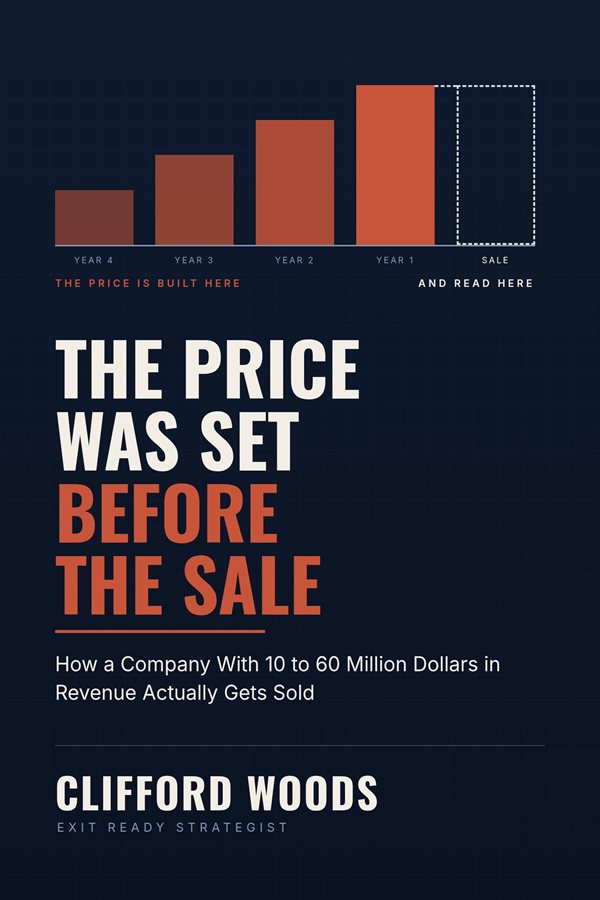
The Company That Never Got Built
Owner dependency is the largest discount the seller controls, and it is what a buyer finds first when the business still runs through its owner. The Company That Never Got Built is the buyer's eye view: the eight structural findings a diligence team surfaces, and what each one costs at the table. If you are three to five years from selling, this book shows you what the person writing the check will see, while you still have time to change it.
Book Two. The Solution.
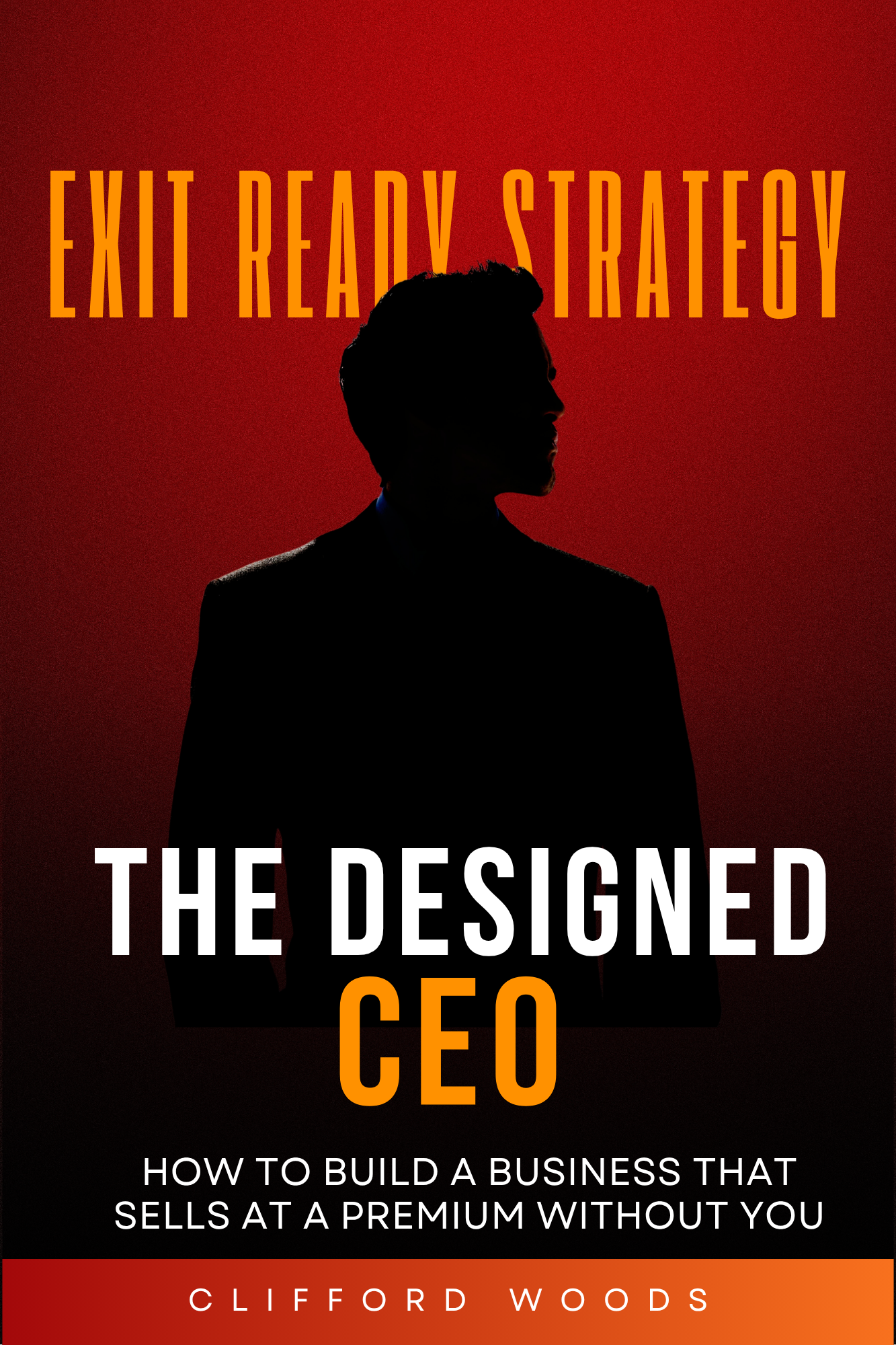
The Designed CEO: How to Build a Business That Sells at a Premium — Without You
A business can be worth buying and still fail to sell, because it was never built to be sold. Buyers in the lower middle market are active, and what they are looking for is a business that runs without its owner. The ones that do sell at a premium, while the ones that do not sell at a discount, if they sell at all. Building a business worth buying at a premium is a three year build, minimum, and The Designed CEO is the blueprint for it.
Book Three. The Truths.
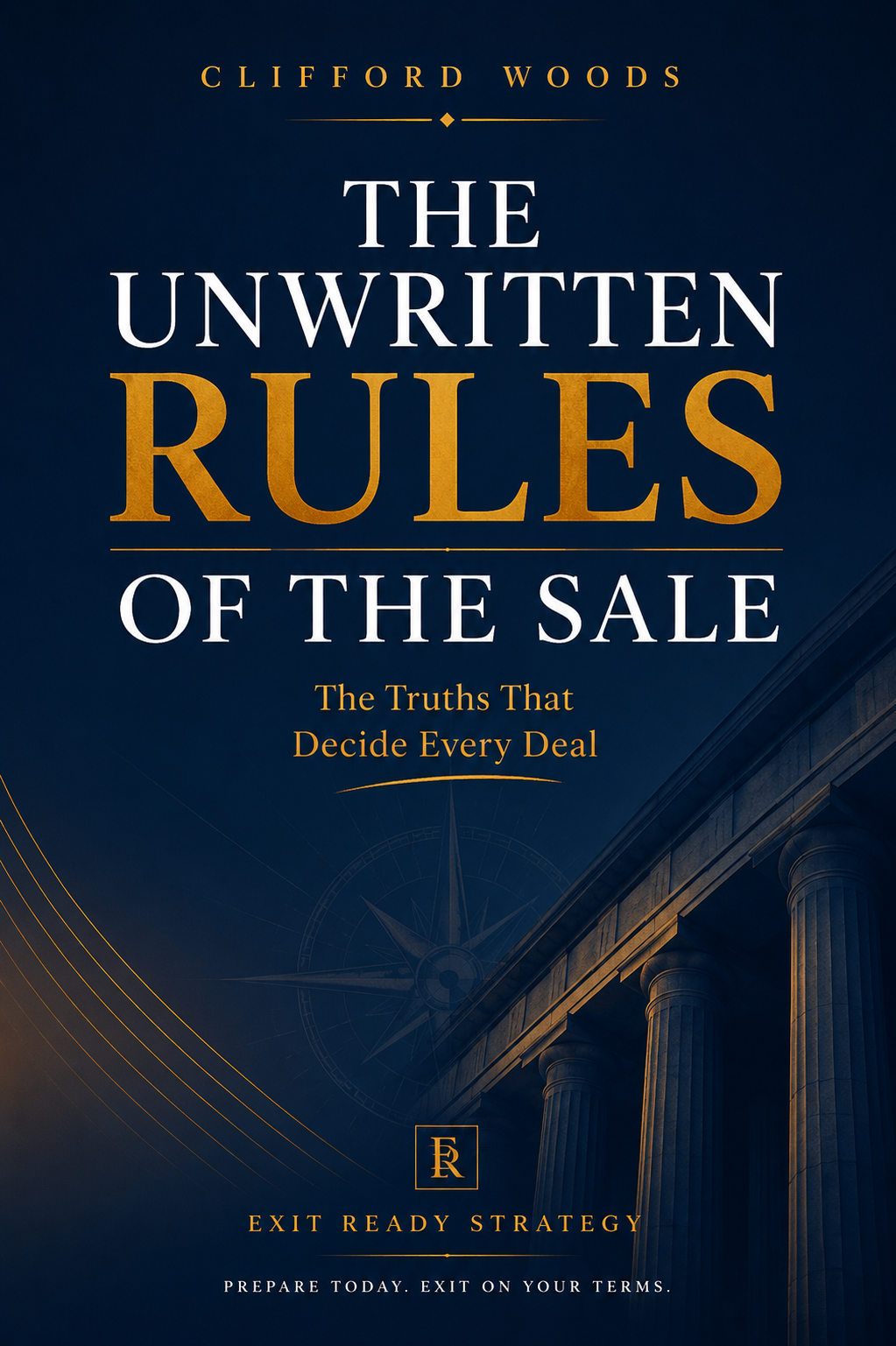
The Unwritten Rules of the Sale — The Truths That Decide Every Deal
The Unwritten Rules of the Sale is a book of truths — the things a buyer already knows and most sellers learn too late, across the table, with the offer already discounted. It is not a how-to. There is no framework to memorize. Just the rules of the game as the other side plays it, stated plainly, one to a page: what buyers actually price, why owner dependency changes the structure of the deal and not just the price, and why the three years before you go to market decide more than the negotiation ever will. Short. Blunt. Built to be read in an afternoon and kept on the desk.
Book Four. The Measurement.
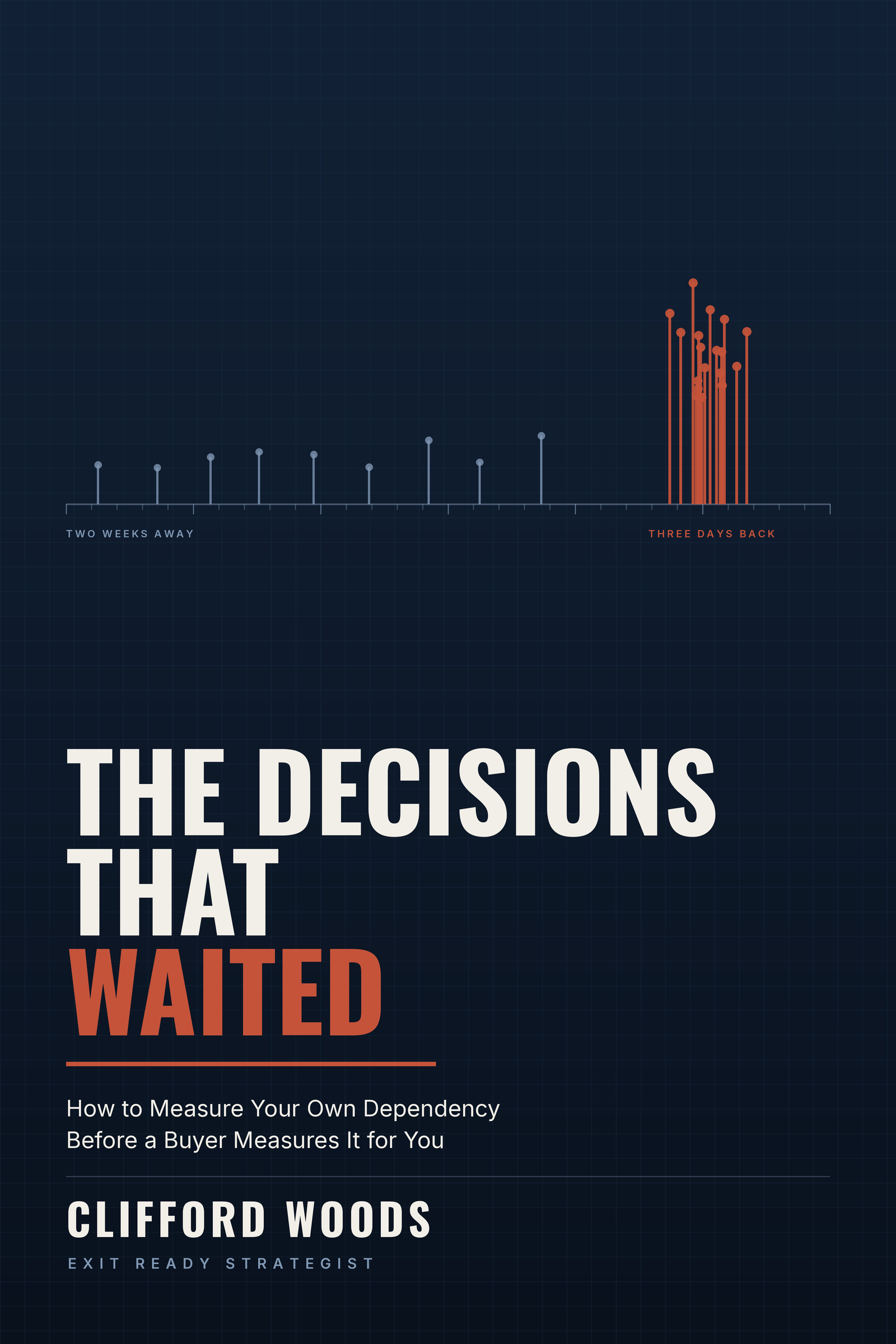
The Decisions That Waited
How to Measure Your Own Dependency Before a Buyer Measures It for You
An owner takes two weeks off. Nothing breaks. He reads that as proof the business runs without him. It is usually proof of the opposite.
Nothing broke because nothing was decided.
This is the measurement book. Twelve tests a chief executive officer runs on his own business, this month, with no buyer in the room and no advisor on the payroll. Every test runs on records the business already produces or on questions he can ask this week.
It names what to measure and what a reading means. It does not tell him what to do about the reading. Reading a score is diagnosis. Changing a score is construction, and construction takes three years.